

Invasive Plants Most Wanted: 5 Invasive Plants to Watch for in Your Yard

Think buckthorn is the only invasive plant threatening your landscape? Think again.
Invasive plants can quietly take over a yard, crowd out desirable vegetation, and make it difficult for native plants to thrive. Here in Southeastern Wisconsin, homeowners may encounter everything from aggressive woody shrubs to fast-spreading woodland plants.
And while these plants may look harmless at first, some can quickly become a much bigger problem. Hoppe Tree Service has a ton of experience in managing woody invasives, and we can help you.
Think of this as your landscape's Most Wanted list.
#1: Common Buckthorn

Alias: Rhamnus cathartica
If invasive plants had a Most Wanted poster, buckthorn would be near the top.
Common buckthorn is a woody shrub or small tree that can reach 20–25 feet tall. It leafs out early in spring and holds its leaves late into fall, shading out native plants for much of the growing season. It can form dense thickets that prevent native tree seedlings and understory plants from getting established.
Buckthorn also produces abundant dark berries that birds and wildlife spread, helping it move from one area to another.
What to look for:
Dense, multi-stemmed growth
Small, oval leaves with slightly toothed edges
Dark berries in late summer and fall
Gray-brown bark with light-colored spots
An orange-colored inner wood when the stem is cut
For larger infestations, simply cutting buckthorn down may not be enough. The plant can resprout, making proper removal and follow-up control important.
#2: Bush Honeysuckle

Aliases: Tatarian, Morrow's and Bell's honeysuckle
Bush honeysuckle may look like an ordinary landscape shrub, but several non-native honeysuckle species are invasive in Wisconsin.
These dense, multi-stemmed shrubs can grow 6–12 feet tall or more and invade forest edges, open woods, roadsides, pastures, and other areas. They can reduce the amount of light reaching plants below them while competing for soil moisture and nutrients.
Because honeysuckle can blend into a landscape, it may go unnoticed until it has established a substantial population.
What to look for:
Dense, arching branches
Opposite leaves
Hollow stems on older growth
Small flowers in spring
Red, orange, or yellow berries depending on the species
If you have a large patch of bush honeysuckle, professional removal can help reclaim space for desirable plants.
#3: Teasel
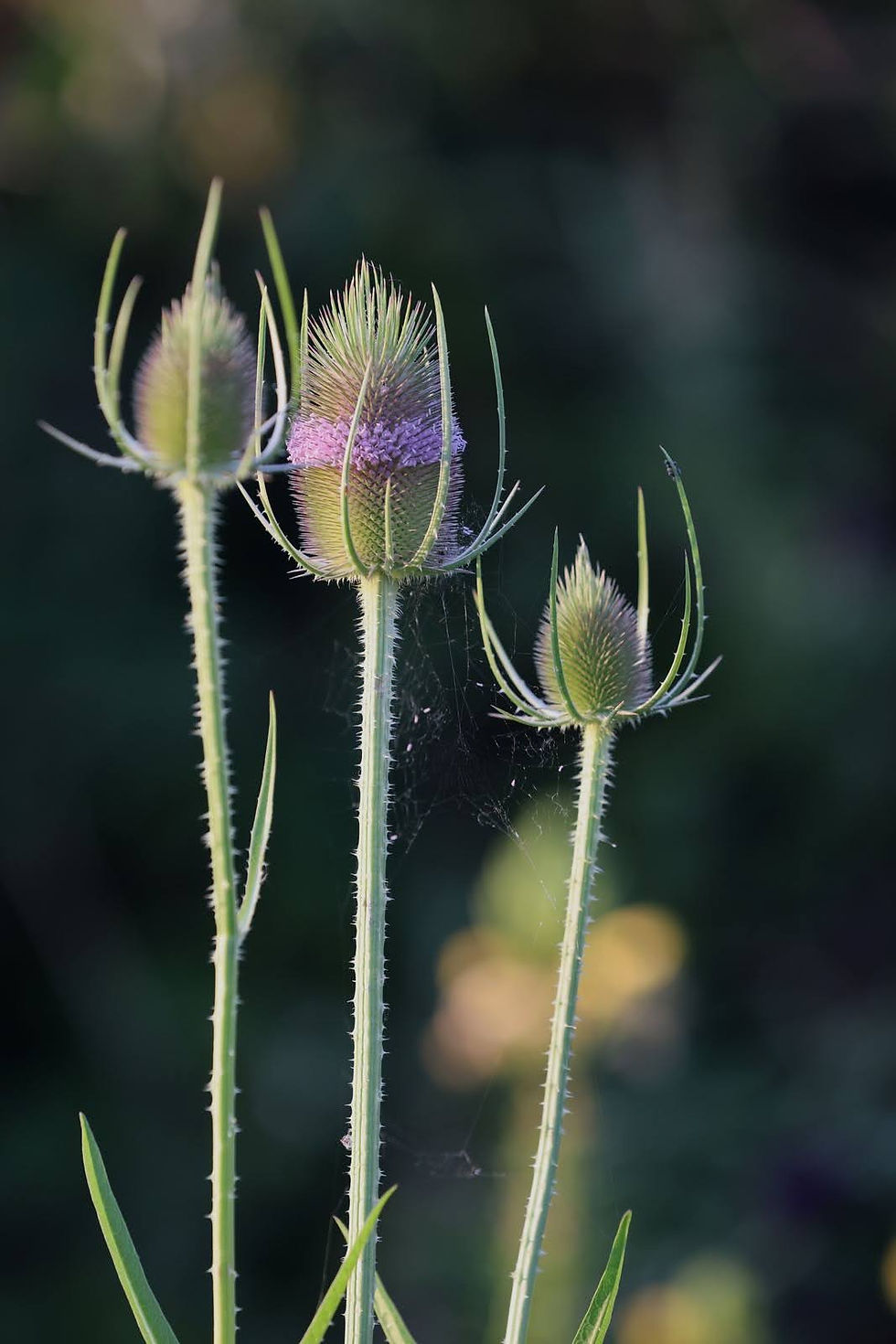
Aliases: Common teasel, Fuller's teasel
Teasel may not look like a traditional tree or shrub, but this prickly plant can quickly become a landscape nuisance.
Teasel forms a low-growing rosette before sending up a tall, prickly flowering stalk that can reach 2–6 feet. Its distinctive flower heads produce large quantities of seed, allowing established plants to spread.
What to look for:
Large, prickly leaves
Tall, angled flowering stalk
Distinctive egg-shaped flower heads
Purple flowers on common teasel
Plants growing in open, disturbed areas
Removing teasel before it produces and disperses seeds can help prevent an infestation from becoming even more difficult to manage.
#4: Garlic Mustard

Scientific name: Alliaria petiolata
Garlic mustard is especially concerning because it can thrive in wooded areas, forest edges, and even residential yards.
This biennial plant typically grows 2–4 feet tall. First-year plants form a low rosette of leaves, while second-year plants produce flowering stems and seed. Garlic mustard can form dense populations and has been associated with declines in native herbaceous plant cover.
What to look for:
Heart-shaped or triangular leaves
White flowers with four petals
Plants growing in shady areas
A noticeable garlic-like smell when the leaves are crushed
Early identification and removal are important because once garlic mustard becomes established, it can spread throughout a wooded area.
#5: Multiflora Rose

Scientific name: Rosa multiflora
This one may fool you because it looks like a rose—but multiflora rose is anything but a welcome addition to your landscape.
Multiflora rose is a thorny, spreading shrub that can reach 10–15 feet tall and 9–13 feet wide. It can form dense, nearly impenetrable thickets that crowd out native plants. According to the Wisconsin DNR, a single plant can produce up to 500,000 seeds per year, with seeds remaining viable in the soil for years.
What to look for:
Long, arching or climbing canes
Sharp, curved thorns
Clusters of small white flowers
Small red rose hips
Dense, tangled growth
Large multiflora rose infestations can be particularly difficult to tackle because the plants are thorny, vigorous, and capable of regrowing from roots or plant fragments.
Don't Let an Invasive Plant Take Over
Invasive plants don't always announce themselves. A few shrubs or plants at the edge of your property can gradually turn into a dense thicket that crowds out the plants you actually want in your landscape.
If you spot buckthorn, bush honeysuckle, multiflora rose, or other invasive woody growth on your property, Hoppe Tree Service can help identify and remove unwanted vegetation as part of your landscape and tree care needs.
The sooner you identify and address an invasive plant, the easier it is to prevent it from spreading.
See Something Suspicious in Your Yard?
Don't let invasive plants become the biggest problem in your landscape.
Contact Hoppe Tree Service at 414-257-2111 to schedule an evaluation and find out what can be done to reclaim your yard.


Comments